Downtown
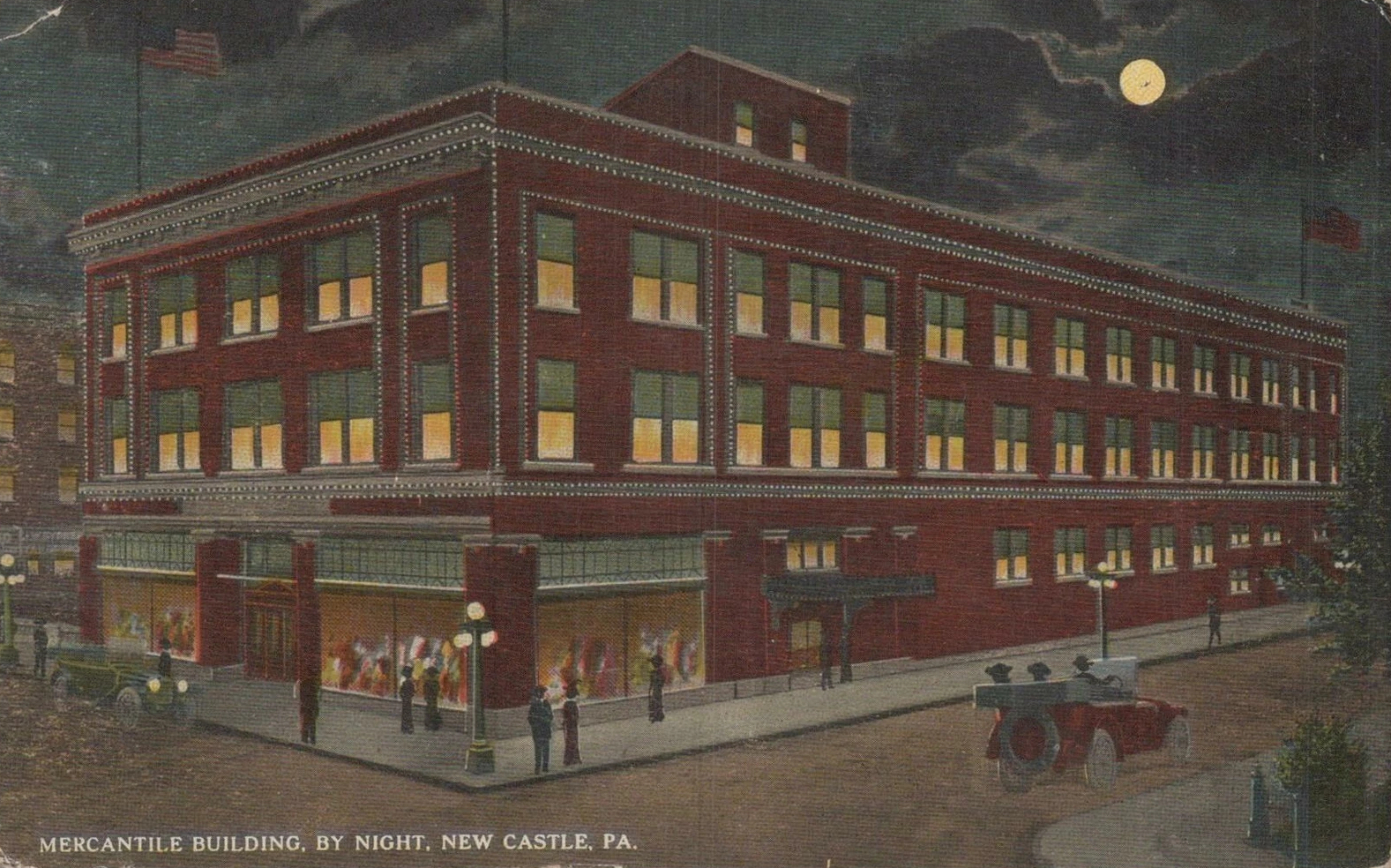
Downtown New Castle, Pennsylvania, was a thriving industrial and commercial center marked by rapid growth and prosperity. It was famously known as the tin plate capital of the world due to the Shenango Tin and Steel Company’s extensive mills, making tin plate manufacturing its dominant industry. The population swelled as waves of immigrants from Europe, particularly Italians, Welsh, and Greeks, flocked to the city to work in the mills and settle in ethnic neighborhoods, contributing to a culturally diverse community. The downtown landscape featured beautiful early 20th-century buildings such as the Scottish Rite Cathedral, St. Mary’s Church, and the Castleton Hotel, which still stand as historic reminders. New Castle also earned unique nicknames during this time: the “hot dog capital of the world” for its famous Greek immigrant chili dog restaurants, and the “fireworks capital of America,” home to renowned fireworks companies like Zambelli and Pyrotecnico.
-
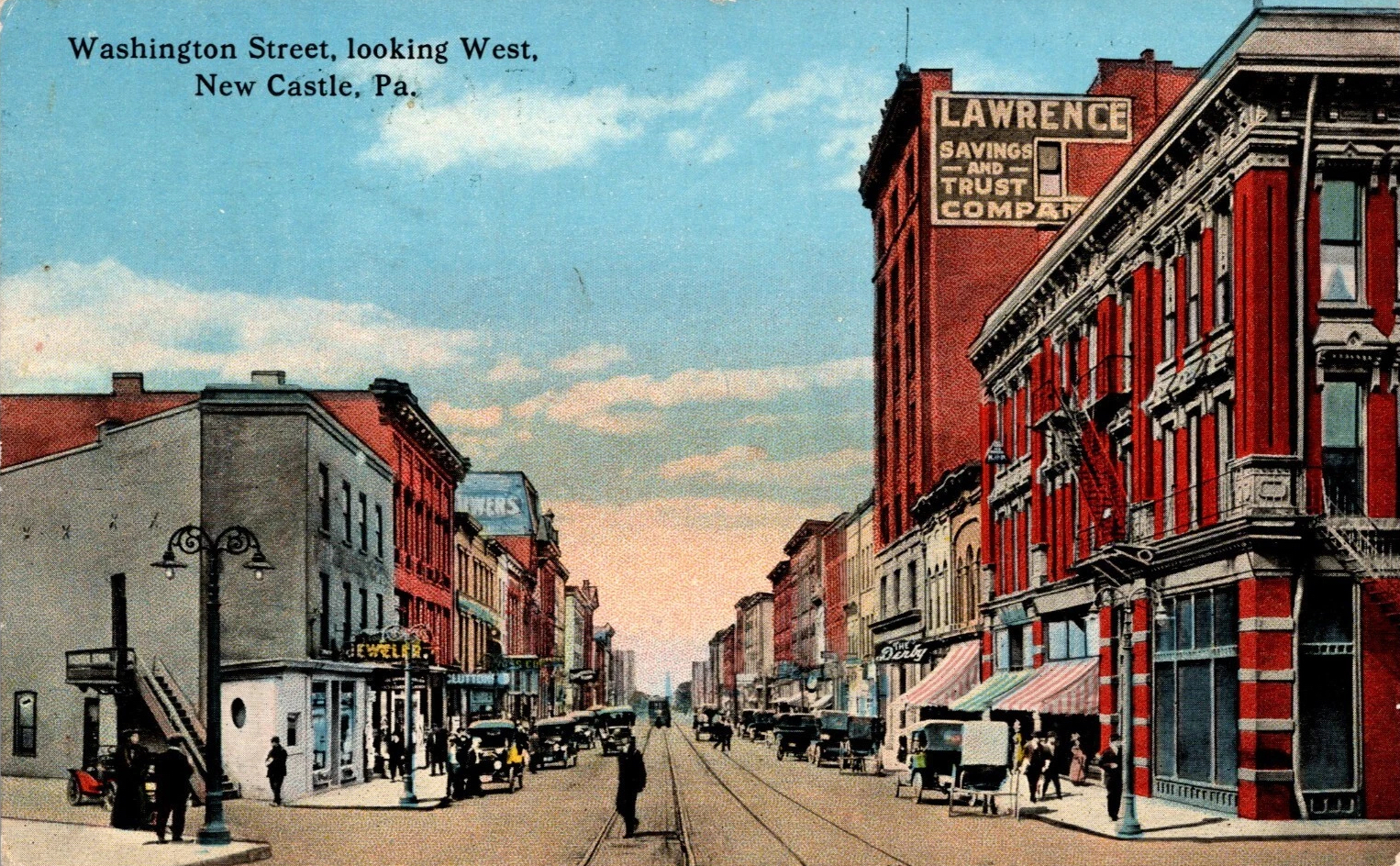
Looking West
Washington Street has remained an important downtown street with historic buildings and institutions contributing to the character and heritage of New Castle’s center. It runs through the historic district that reflects several architectural styles and remnants of the city’s industrial past, serving as a link between the old town core and more modern developments. The
-

Public Square
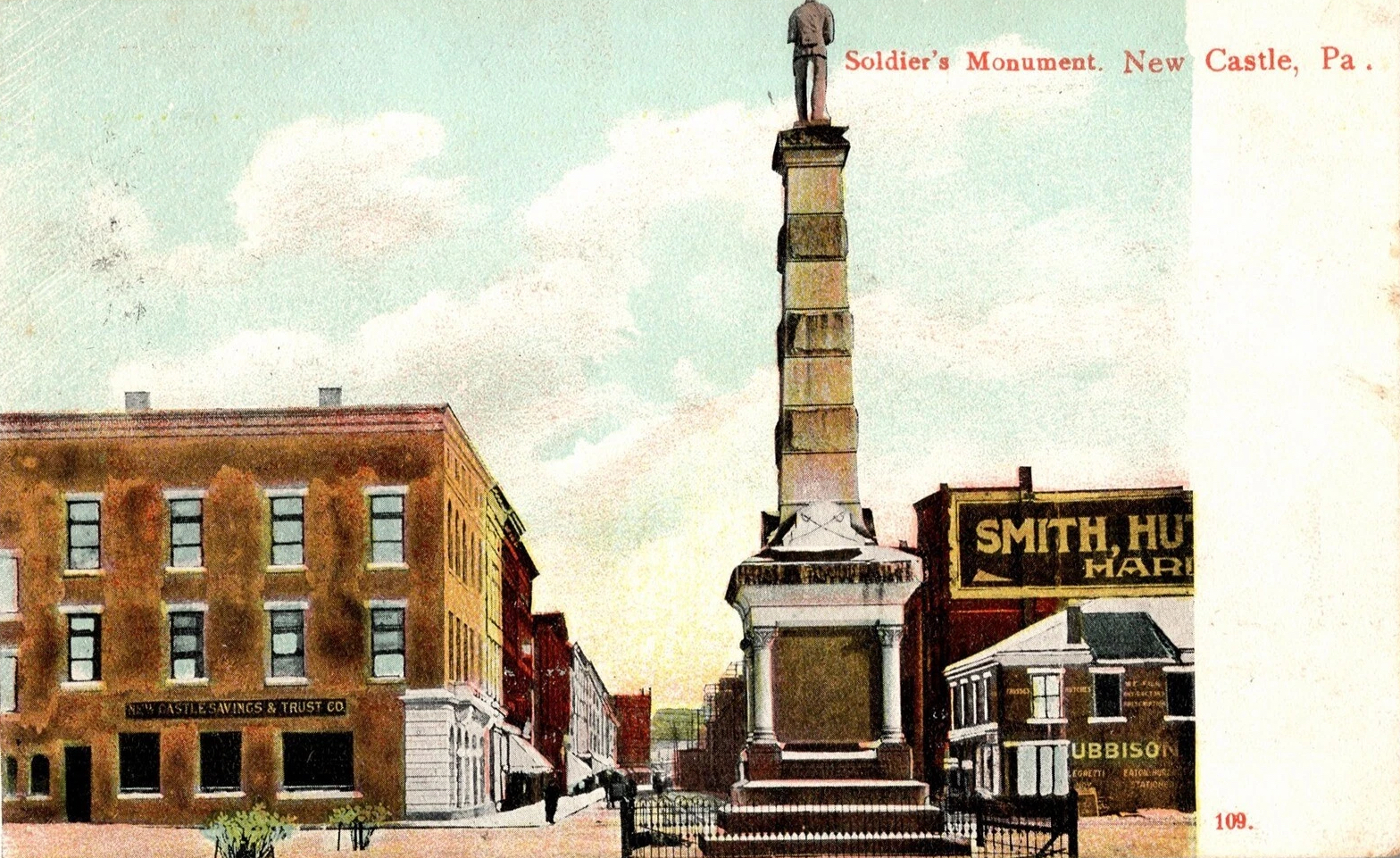
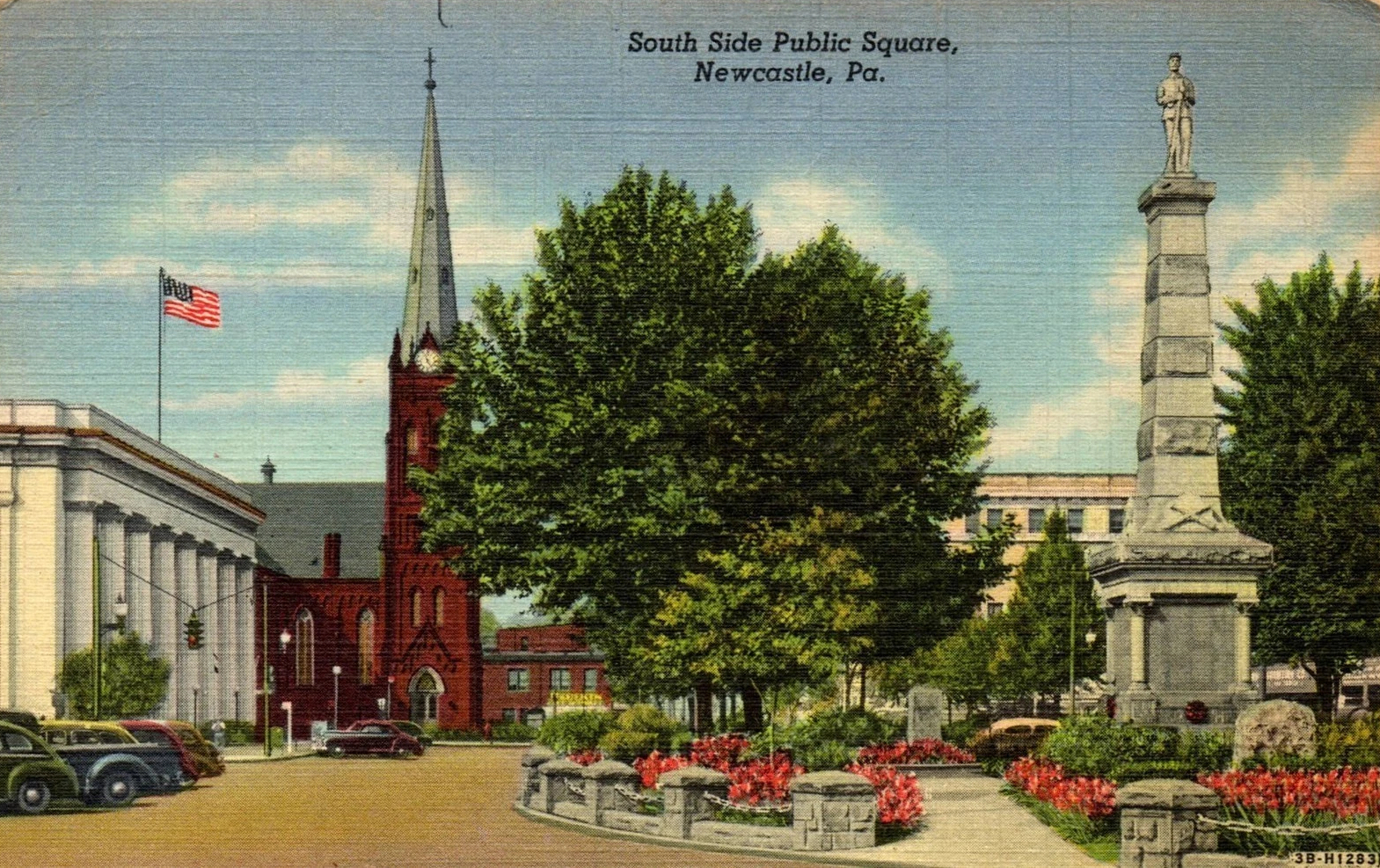
The square has gone by several names over the years, such as Central Square, Pershing Square after World War I, and Kennedy Square after President John F. Kennedy’s assassination, though “The Diamond” remains the common name. It continues to serve as the heart of downtown New Castle, surrounded by historic and municipal buildings, and features
-
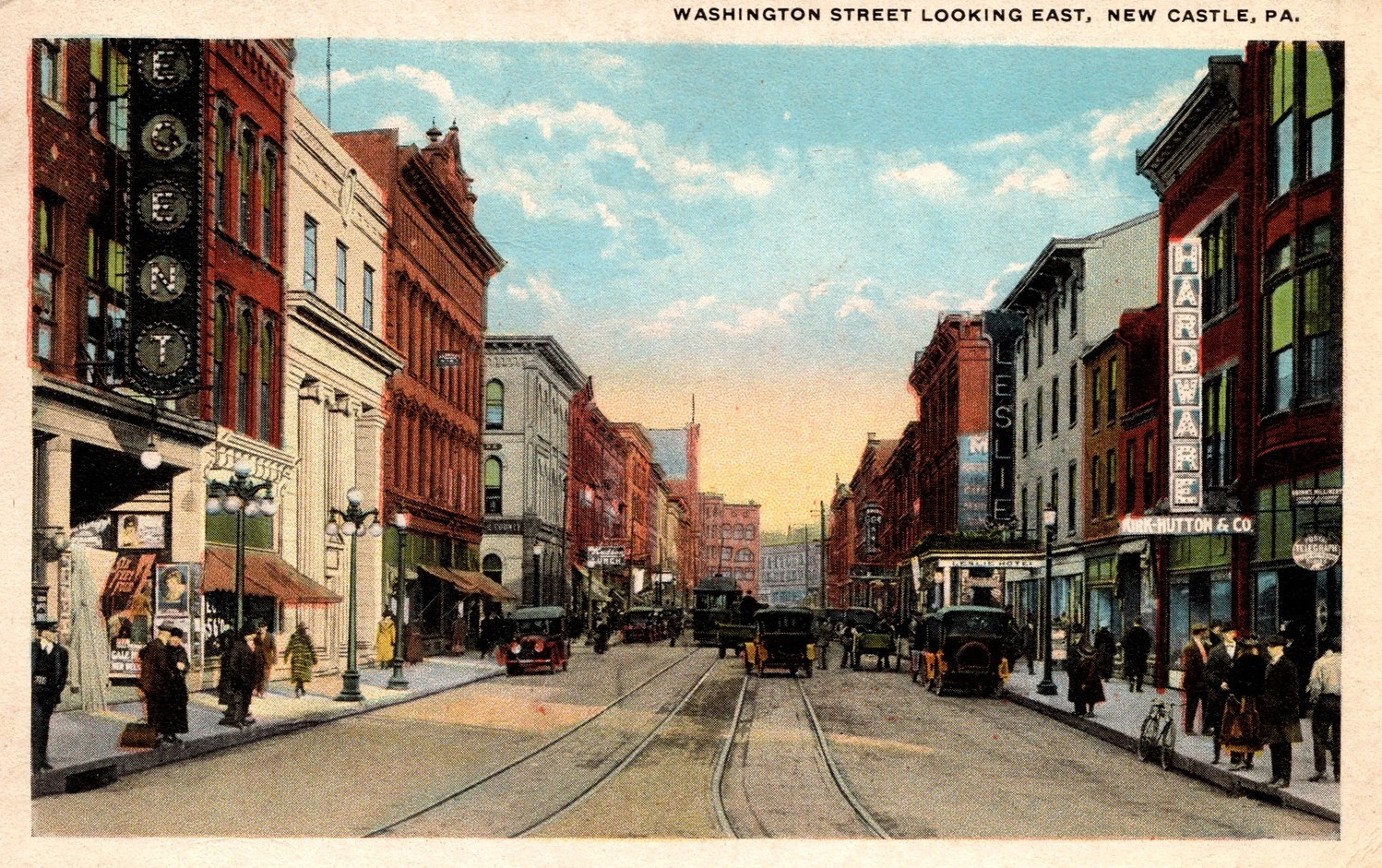
E. Washington Street
Regent Theater, the Leslie Hotel, even a telegraph office can all be seen in this view of East Washington Street, New Castle, Pennsylvania. The Leslie Hotel was located on the corner of Mercer Street and East Washington Street. It was originally known as the “Indian Chief Hotel” before being renamed by its owner, Mr. Leslie,
-
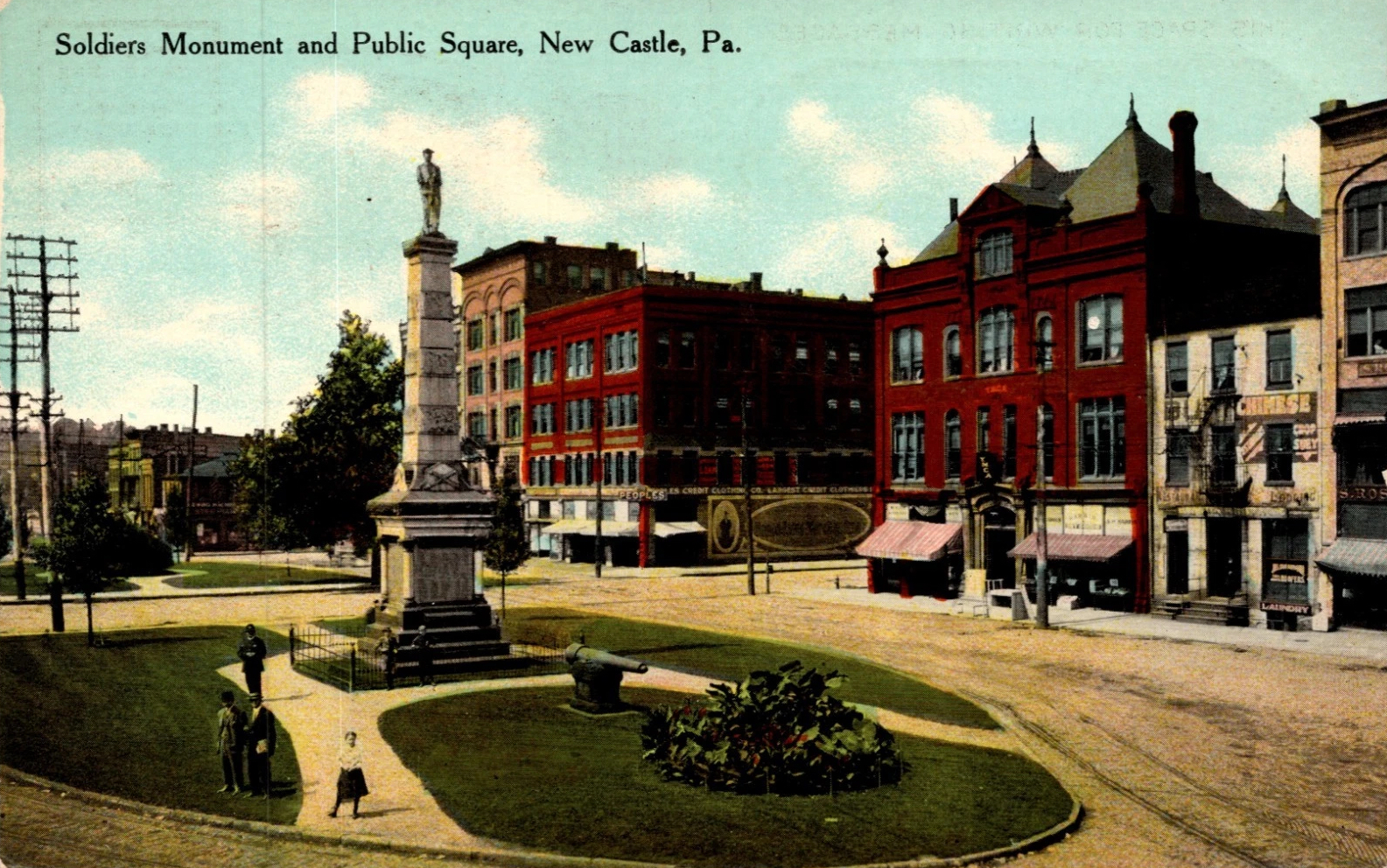
Public Square
The historic public square at the intersection of Washington and Jefferson Streets, was originally laid out in 1798 by John Carlysle Stewart. It was designed as a central open market space modeled somewhat after Philadelphia and became the heart of the original settlement and remains the downtown focal point. The area has been known by
-
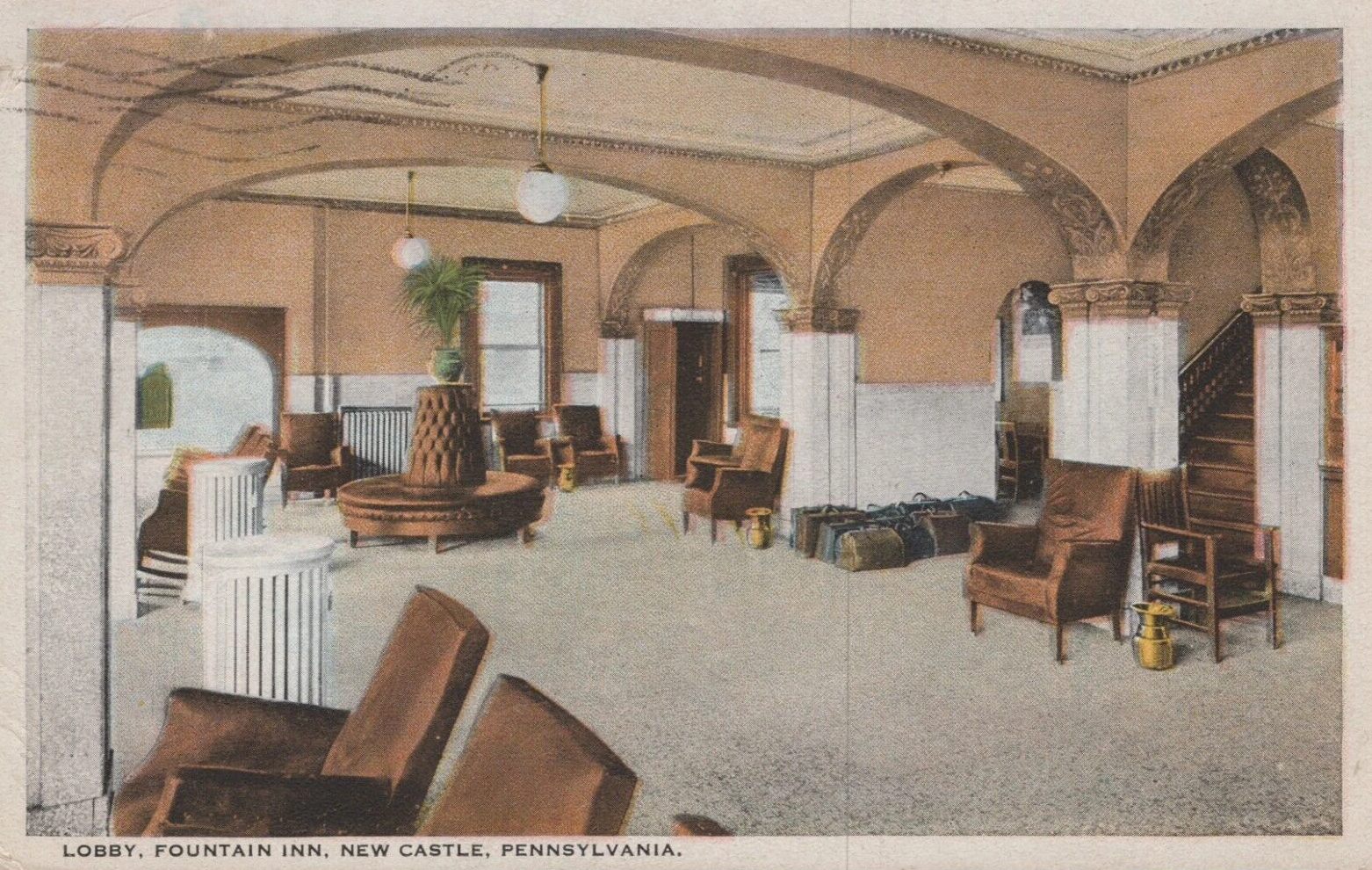
Fountain Inn
The Fountain Inn in New Castle, Pennsylvania, was a historic four-story brick hotel originally built between 1851 and 1852 as the Cochran House. Around 1881, it became known as the Fountain House or Fountain Inn, named for the elaborate four lion head fountains that flowed drinkable water into a basin for horses. It was located
-
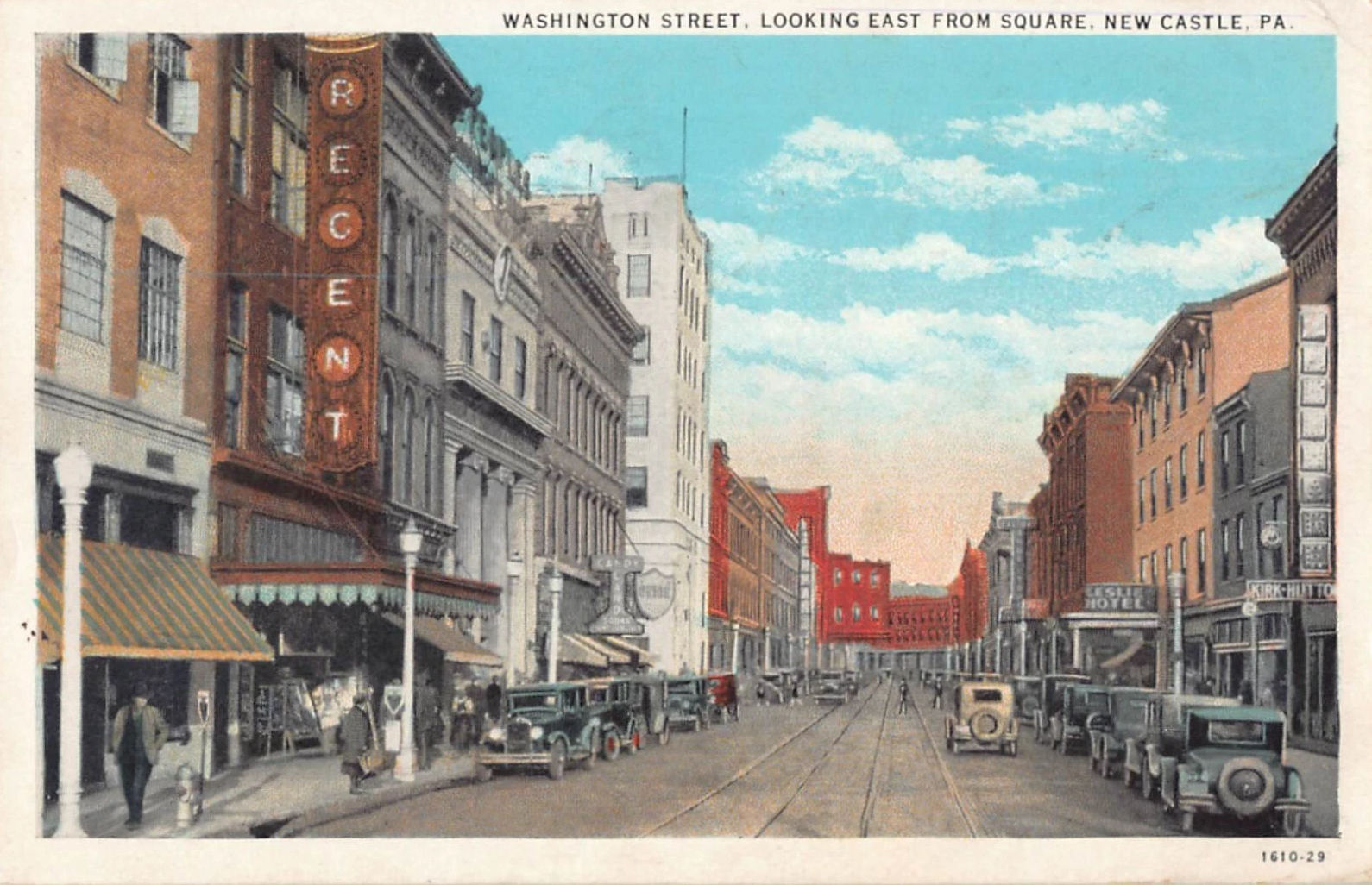
Washington Street
The Regent Theater in New Castle, Pennsylvania, was originally built in 1913 as the Park Theater and was sold and renamed the Regent in 1916. It was located on East Washington Street near the Diamond in downtown New Castle. The theater had a seating capacity of about 500 and was known for programming “high class